


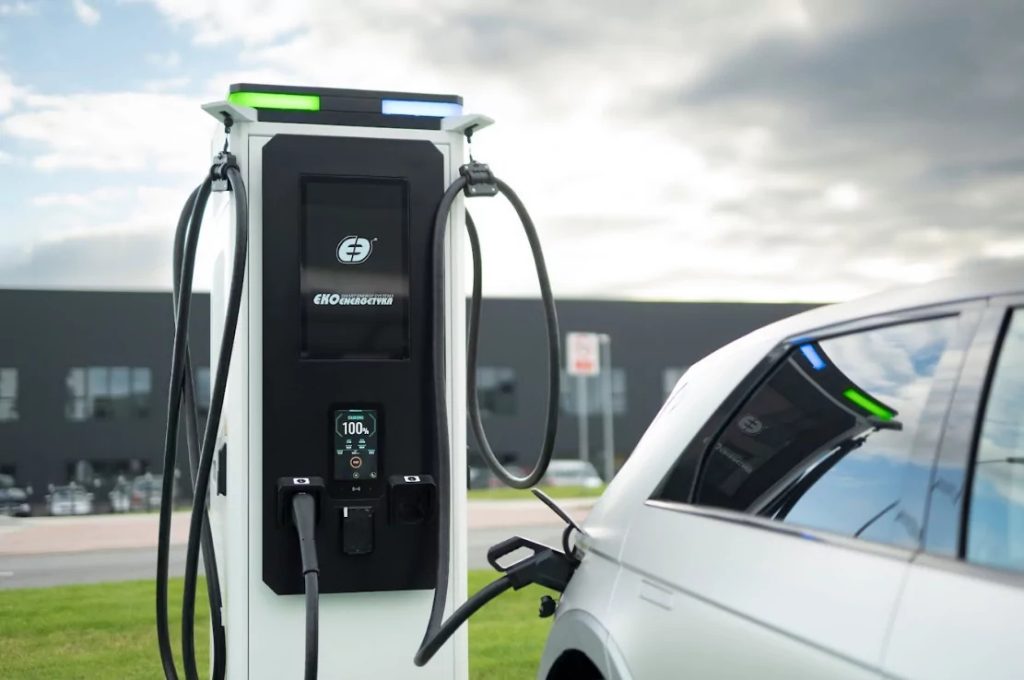
Public EV charging prices can feel unpredictable—because they are. Unlike home charging (where you pay your utility’s electricity rate), public charging is a retail service that layers in station operating costs, demand charges, maintenance, location fees, and profit margins. The result: the cost to charge at a public EV charging station can range from close to home electricity pricing at some Level 2 stations to premium convenience pricing at DC fast chargers—especially in busy metro areas or along major travel corridors.
This guide breaks down typical costs, why prices vary, and how to estimate what you’ll actually pay for a session.
The quick answer: typical public charging costs
Public charging usually falls into two buckets:
- Level 2 (AC) public chargers: often priced per kWh (or sometimes per hour), typically lower than DC fast charging.
- DC fast charging (Level 3): usually priced per kWh (in many states), sometimes with time-based pricing, and often the most expensive option.
A useful benchmark for DC fast charging in the U.S.: charging-data firm Paren reported the national average public fast-charging price was about $0.49/kWh in Q3 2025 (and noted it ticked up slightly quarter over quarter).
For a real-world example from a major network, Kelley Blue Book cites Electrify America Pass pricing at $0.64/kWh at a DC fast charger in the Atlanta area (example shown in their article).
What determines the price at a public EV charging station?
Charger type and speed
- Level 2 is slower, typically used for destination charging (shopping centers, hotels, offices).
- DC fast delivers energy much faster—convenient, but priced higher.
J.D. Power notes Level 3 (DC fast) can cost roughly $0.30–$0.48/kWh in their consumer guide (prices vary by market and date).
Pricing model: per kWh vs per minute vs session fees
In the U.S., per-kWh pricing has become the dominant model for DC fast charging. Paren reported that fixed per-kWh pricing accounted for just over 80% of pricing models nationally in Q4 2025.
Still, you may see:
- Per-minute pricing (often where per-kWh billing is restricted or for legacy setups)
- Session fees
- Peak/off-peak or time-of-use pricing (varies by network/location)
Memberships and subscriptions
Many networks offer lower rates if you subscribe or enroll in a member plan. Electrify America explicitly states pricing depends on location and plan and that real-time pricing is shown in the app/at the charger.
Idle fees
If you stay plugged in after charging is complete, some networks charge idle fees. Electrify America notes idle fees may be imposed after your session ends.
Local electricity costs and demand charges
Even the underlying electricity cost varies widely. As a national reference point, the U.S. EIA reported average retail electricity revenue of 13.73 cents/kWh in December 2025 (all sectors).
Public charging is commonly priced well above this because it’s not just electricity—you’re paying for the charging service and infrastructure.
What does a charging session actually cost?
The cleanest way to estimate is:
Estimated cost ≈ (kWh you add) × (price per kWh)
If you want to be extra realistic, add ~5–15% for charging losses (varies by vehicle and conditions). For simple trip planning, many drivers just use the kWh added shown on the charger receipt.
Example A: adding 50 kWh at a DC fast charger
This is a common road trip top-up amount.
| DC fast price | Cost for 50 kWh |
|---|---|
| $0.49/kWh (U.S. average fast charge benchmark) | $24.50 |
| $0.64/kWh (example Electrify America Pass pricing) | $32.00 |
Example B: cost per 100 miles at public charging
This depends on your EV efficiency. A simple planning number is ~30 kWh per 100 miles for many midsize EVs at highway speeds (some do better, some worse).
- At $0.49/kWh, 30 kWh costs $14.70 per 100 miles
- At $0.64/kWh, 30 kWh costs $19.20 per 100 miles
That’s why the same EV can feel cheap to run when home-charged but noticeably pricier when relying heavily on DC fast charging.
Level 2 vs DC fast: typical cost comparison
Here’s a practical comparison you can use when budgeting.
| Charger type | Best use case | Typical pricing structure | What you might pay |
|---|---|---|---|
| Public Level 2 (AC) | Shopping, hotel, work, long stops | Per kWh or per hour | EVgo notes Level 2 can be $0.28/kWh in select locations (pricing varies by region). |
| DC Fast (Level 3) | Road trips, quick turnaround | Usually per kWh; may have idle fees | Benchmarks include ~$0.49/kWh U.S. average (Q3 2025) and higher examples like $0.64/kWh in a specific EA example. |
Important: Networks often state clearly that pricing varies by region and station. EVgo, for example, emphasizes rates vary and you should check the app for station pricing.
What about public charging costs outside the U.S.?
If your audience is international, it helps to include a benchmark from another large market. In the UK, Zapmap’s Charging Price Index reported that in January 2026, the weighted average PAYG price was:
- 54p/kWh on Standard and Standard Plus chargers
- 76p/kWh on Rapid and Ultra-Rapid chargers
This mirrors the same global pattern: faster charging generally costs more per kWh.
How to pay less at public EV charging stations
- Prefer Level 2 when you have time (hotels, malls, overnight destinations).
- Use memberships only if your usage justifies it (do the math per month).
- Avoid charging to 100% on DC fast unless you truly need it—charging slows near the top, which can increase time-based costs (and wastes your time).
- Watch for idle fees and move the car when you’re done.
- Compare stations nearby—even a few miles can mean a very different price.
FAQs
Is public charging more expensive than charging at home?
Usually, yes. Home electricity benchmarks are far lower than many public fast-charging prices. For instance, the EIA’s all-sector average retail electricity figure was 13.73 cents/kWh in Dec 2025, while U.S. fast-charging benchmarks can be around $0.49/kWh or higher in some locations.
Why do prices vary so much between chargers?
Because networks and site hosts set prices based on local electricity costs, site lease costs, utilization, and infrastructure expenses, and some apply peak pricing or different rates by power level and plan. Electrify America explicitly notes station pricing depends on location and plan and is shown in the app/charger.
Do all chargers bill per kWh?
Not always—but it’s increasingly common for DC fast charging. Paren reported fixed per-kWh pricing was just over 80% of pricing models nationally in Q4 2025.
Conclusion
So, how much does it cost to charge at a public EV charging station? In 2026 planning terms:
- Public Level 2 can be relatively affordable (often around a few tenths of a dollar per kWh in many cases, depending on site and region).
- DC fast charging commonly lands higher, with benchmarks around $0.49/kWh on average (and sometimes substantially more depending on the network, city, or corridor).